
Hospitals & clinics
ICT for hospitals and clinics where reliability and confidentiality come first
Websites patients can rely on, email that reaches the right department, protected patient information and computers, networks and power that keep clinics running.
- Patient-friendly websites
- Department email
- Data protection
- Power & network

Patient-firstConfidentiality & uptime
Technology in healthcare: reliability and confidentiality first
Hospitals, clinics, diagnostic centres, pharmacies and specialist practices depend on technology in ways where failure has real consequences. A receptionist can’t find a patient’s appointment. A laboratory result email doesn’t arrive. The website shows old opening hours, so a patient travels across Kampala to a closed clinic. A laptop with patient records is stolen from a car.
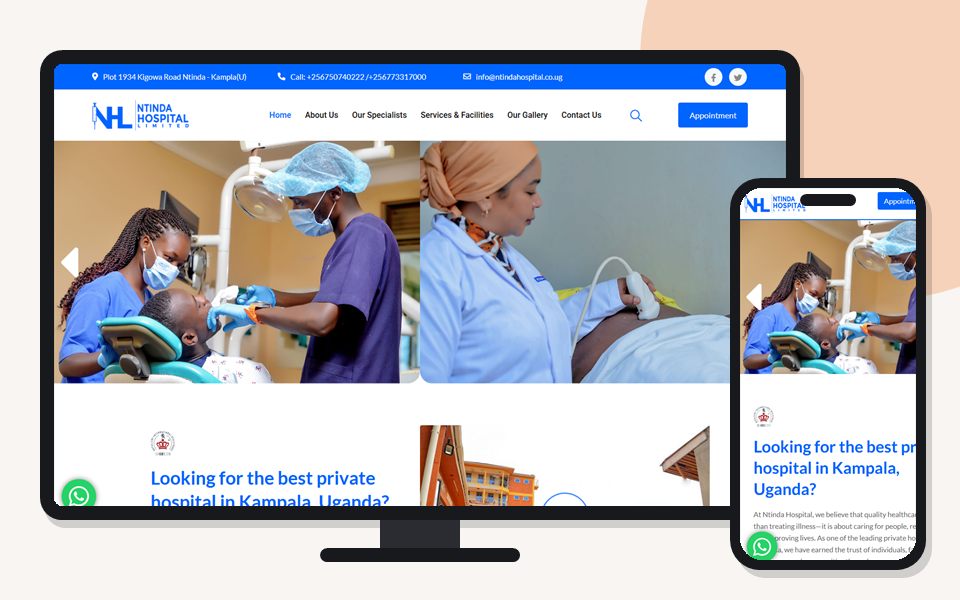
Generation Solutions works with healthcare providers including a private hospital in Ntinda, specialist diabetic foot-care services and veterinary practices. We don’t supply clinical systems. Our role is to make everything around them dependable and secure. That means websites that inform patients, email that reaches the right department, computers and networks that stay up, and sensible protection for sensitive information. This page explains how we approach ICT for healthcare providers.
Common ICT challenges for healthcare providers
| Challenge | Impact |
|---|---|
| Outdated website information | Patients arrive at the wrong time or can’t find services and specialists |
| Shared logins at reception and wards | No accountability for who accessed or changed records |
| Patient information on personal phones and WhatsApp | Confidentiality risks and lost information |
| Unreliable power and internet | Systems unavailable during clinics; damaged equipment |
| Ageing computers at reception, labs and pharmacy | Slow service and frustrated staff and patients |
| Email to departments going unanswered | Missed referrals, lab queries and supplier communication |
A website patients can rely on
Patients often look up a hospital or clinic in a hurry, on a phone. The website must make critical information obvious:
- emergency contact numbers and whether emergency services operate 24 hours, if that is genuinely the case;
- departments, services and specialist clinics, with the days they run;
- location, directions using landmarks, parking and visiting hours;
- how to book an appointment or make an enquiry, by phone, WhatsApp or form;
- insurance and payment information as your facility chooses to publish it;
- clear, plain-language service descriptions rather than medical jargon.
Clinical claims and health information should be reviewed by your medical team before publication. See our website design services and the healthcare sites we’ve built below.

Department email and patient enquiries
Role-based addresses for reception, appointments, laboratory, pharmacy, accounts and administration keep communication flowing even when staff rotate shifts or change roles. Shared mailboxes let several people monitor the same address so enquiries aren’t missed. Send website forms to monitored mailboxes, and give staff a clear rule: which requests get an email reply, and which need a call back.
Patient confidentiality and data protection
Health information is among the most sensitive personal data. Uganda’s Data Protection and Privacy Act, 2019 and professional confidentiality duties apply. Practical measures we help implement:
Individual accounts
Every staff member signs in as themselves, with access matched to their role.
Strong sign-in
Multi-factor authentication for email and systems holding patient data.
Device protection
Screen locks, encryption on laptops and secure disposal of old drives.
Safe messaging
Policies that keep patient information out of personal WhatsApp groups and email.
We support technical controls; clinical record policies and legal compliance remain the responsibility of the facility and its advisers.
Working around clinical and billing systems
Many facilities use hospital management, laboratory, pharmacy or billing systems supplied by specialist vendors. We don’t replace those vendors. We make the environment around them solid: computers that meet the requirements, reliable network connections to every workstation, backups that include system data, and user access that matches roles. When a facility is choosing a new system, we help it ask vendors about hosting, data ownership, backups, support and what happens to data if the contract ends.

Power, network and uptime
Power cuts and surges are a constant challenge. UPS units for servers, network equipment and critical workstations; surge protection throughout; and safe procedures during generator changeovers protect both equipment and data. A well-designed network with wired connections for critical workstations, managed Wi-Fi for mobile devices, a separate guest network for patients and visitors, and a backup internet connection keeps services running. See network support.
Reception and front-desk technology
Reception is where technology problems are most visible to patients. Fast, reliable computers, a working printer for receipts and forms, a clear queue process and staff who know a few quick fixes make a noticeable difference to patient experience. We prioritise front-desk equipment in maintenance plans and support.
Online consultations and remote communication
Some providers offer video consultations, follow-ups by phone or results by secure message. These need dependable internet, appropriate devices, clear consent and secure platforms. We can set up the technical side, such as accounts, devices, connectivity and security. Your medical team defines the clinical protocols.

Helping patients find you
Patients search for services and locations: “private hospital Ntinda”, “diabetic foot clinic Kampala”, “vet near me”. An accurate Google Business Profile with correct hours, phone numbers, photos and directions, plus clear service pages on your website, are the foundations. Keep hours accurate — especially for public holidays — because outdated information causes real harm in healthcare.
Support that respects clinical workflows
Changes in a healthcare setting must not disrupt clinics. We schedule updates and maintenance for quieter periods, keep critical workstations on a priority list, and provide remote support so many problems are fixed without anyone entering clinical areas. On-site support depends on location and the arrangement agreed.
Veterinary and allied health practices
Veterinary clinics, physiotherapy and dental practices, opticians and pharmacies share many hospital needs on a smaller scale. They need a clear website with services and booking, and a Google profile customers can find. They also need reliable email and computers, and sensible protection for client records. We tailor the setup to the practice’s size and budget.

Continuity when systems fail
Every facility should know how it will keep working if the internet fails, the server goes down or ransomware strikes. A short continuity plan sets out manual fallbacks for registration and billing, and where and how you back up data. It also says who to call and how to restore services. We help write and test it.
Shift work, locums and staff changes
Healthcare facilities run on shifts, locum doctors and rotating staff, which makes shared logins tempting and risky. Create individual accounts quickly for locums and disable them the moment they leave. Add shared mailboxes for departments that work around the clock, and a clear onboarding checklist. Together, these keep access accountable without slowing care. We run onboarding and offboarding for clients on support arrangements and keep a record of each change.
Choosing and placing workstations
Reception, consulting rooms, laboratories and pharmacies need computers that start quickly, handle the facility’s systems without lag and fit the physical space. Solid-state drives, adequate memory, screen privacy filters at reception, wired network connections where possible and UPS protection for critical machines make a practical difference. We keep an inventory of every device, its location and its condition. That way you plan replacements instead of facing a failure in the middle of a clinic.

Printing, labels and peripherals
Receipts, prescriptions, laboratory labels, referral letters and reports all depend on printers working. Give printers fixed network addresses and install the correct drivers on every workstation. Keep spare consumables and a quick-fix guide for staff. These steps prevent many of the delays that frustrate patients waiting at the counter. Label and barcode printers used by laboratories and pharmacies need particular care with drivers and paper settings.
Communication with labs, insurers and suppliers
Facilities exchange information daily with external laboratories, insurers, suppliers and referring doctors. Reliable email with proper authentication records means your messages arrive and recipients trust them. Role-based mailboxes send replies to the right team. Secure sharing tools are safer than emailing patient documents to personal addresses. We set up these channels so communication is dependable and confidential.
Training staff on security
Most incidents start with a person: a phishing email opened at reception, a password written on a monitor, a phone with patient photos lost on a matatu. Short, practical sessions for clinical and office staff reduce risk more than any single technical tool. Cover how to spot phishing, lock screens, keep passwords private and handle patient information on phones.

Backups for patient and financial records
Patient registers, laboratory results, billing and accounts are records a facility cannot afford to lose. Back up every system that holds them, automatically. Store the copies away from the facility’s own server, and test them by actually restoring data. If a vendor hosts your clinical system, ask exactly how they back it up and how far back you can restore. Also ask how you would get your data if you changed provider. We verify backup arrangements as part of every healthcare engagement and record the results for management.
How we work with healthcare providers
Understand the facility
Departments, staff, systems, patient flows and where problems occur.
Assess
Website, email, devices, network, power protection and data protection.
Prioritise
Patient-facing and clinical-critical items first, then improvements.
Implement carefully
Changes scheduled to avoid disrupting clinics, with testing before go-live.
Support
Priority attention for critical workstations and regular maintenance.
Your next step
Tell us about your facility — departments, staff numbers, the systems you use and where problems occur. We will review your website, email, devices, network and data protection, and recommend improvements that respect clinical workflows and patient confidentiality.
Healthcare ICT questions
Do you provide hospital management software?
No. We support the computers, network, email, website and security around the systems your vendors provide, and help you evaluate vendors against your real workflow, data protection duties and budget.
How should we handle patient information on WhatsApp?
Avoid sharing identifiable patient information in personal groups. Use organisational accounts and approved channels, and agree a clear policy with staff.
Can our website show doctors’ profiles?
Yes, with each doctor’s consent and verified information about qualifications and specialties. Profiles with clinic days and how to book help patients choose and reduce phone queries.
How do we keep systems running during power cuts?
UPS units for critical equipment, surge protection and safe changeover procedures, plus a backup internet connection.
Can patients book appointments online?
Enquiry and booking request forms are straightforward; fully automated booking depends on your systems and workflows.
Can you set up accounts for locum staff?
Yes. Locums can have individual, time-limited accounts with access to what they need, disabled as soon as their engagement ends.
Do you work with clinics outside Kampala?
Yes. Website, email and remote support work anywhere; on-site visits depend on location.
Portfolio
Healthcare websites we’ve built
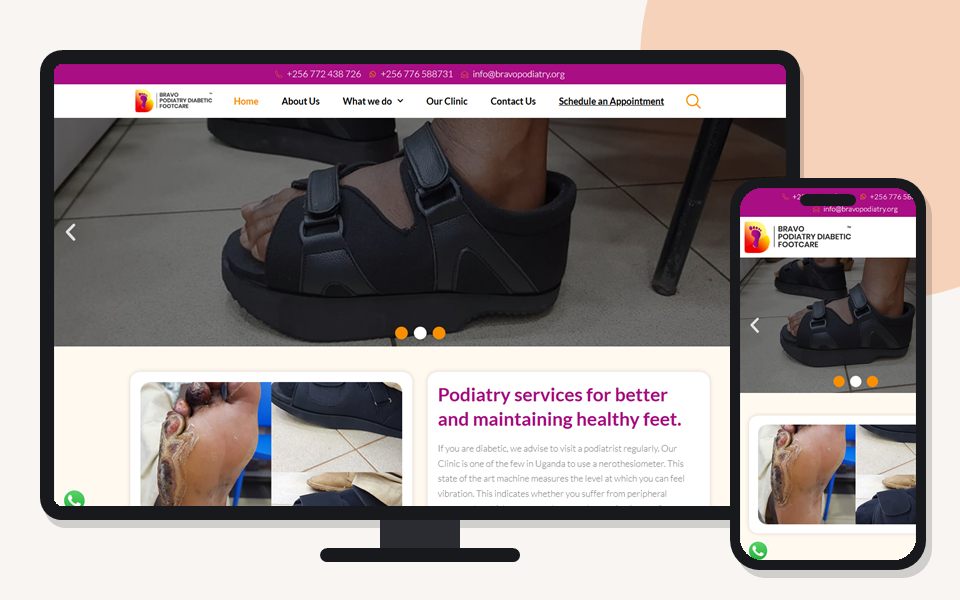
Bravo Podiatry

SMG Vets
